
Timecode performs in a different way to the most other conventional films. Timecode breaks the viewer’s relationship with the narrative; something that is not common in cinema. Mike Figgis intentionally divides the screen into quarters, and shows four different narratives on each 93 minutes of a continuous shot filmed solely on digital cameras (Ebert, 2000).
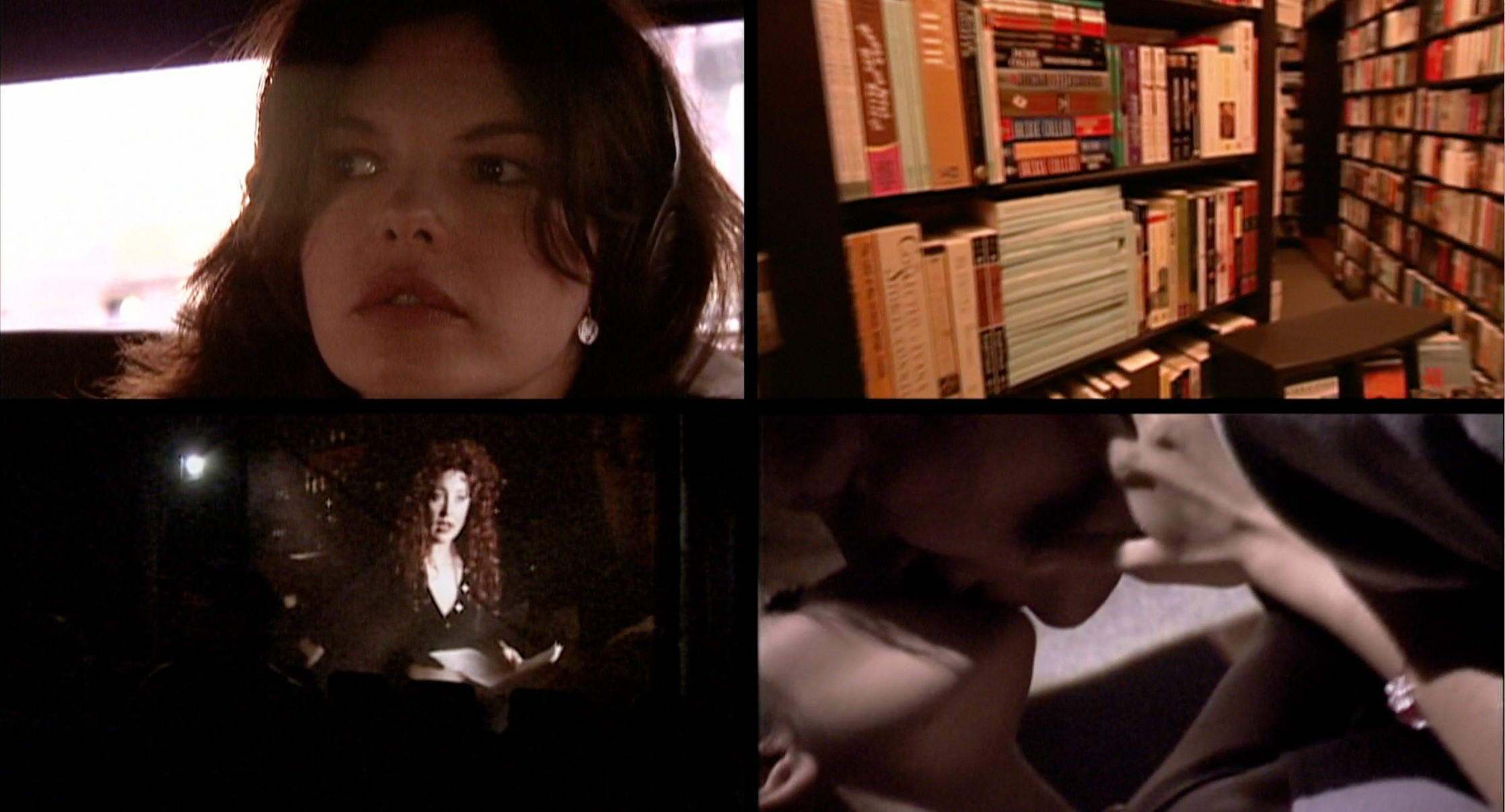
Figgis shot his innovative piece 15 times before being satisfied with one continuous take. There was a high importance placed on the genuineness of the film, as this is what made it feel like reality to the audience. The film is as close to experimental cinema as a major release can be (Wolff, 2000), through the use of texturality of the low grade film, Figgis is alludes to CCTV footage. By doing this he is dealing with surveillance as a concept, transforming form into content (Harvey, 2000). The transformational aspect enables the viewer to immerse themselves in otherwise distracting scenes.
The improvisation of dialogue was also used to place the spectator into the scene. Figgis guides us through the narratives which overlap through his use of diegetic sound. For example, he will raise the volume of one quadrant, to signify its importance to the viewer at any given time.
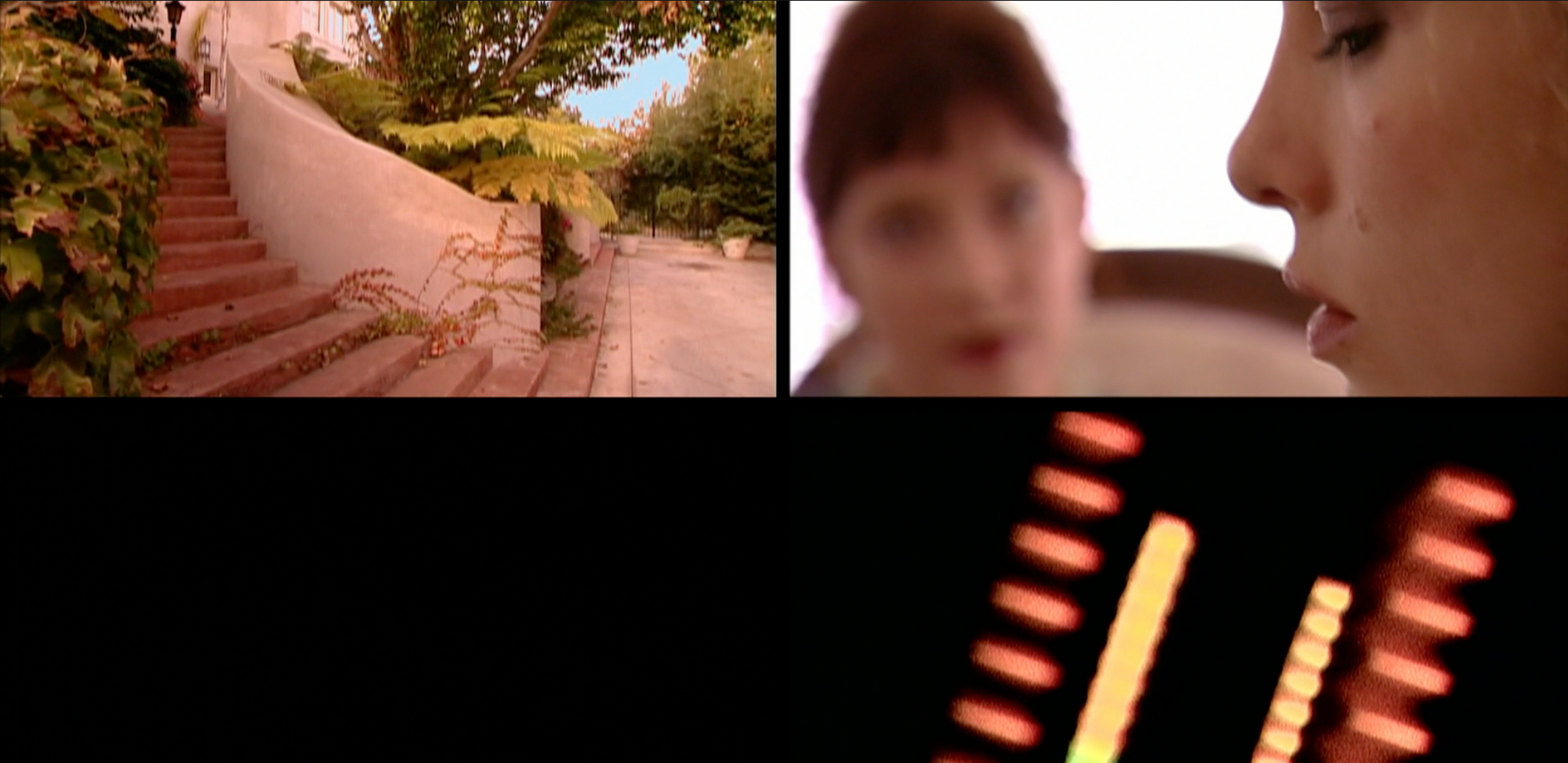
Fig. 2 Screengrab from Timecode
The audience thus becomes perversely aware that “one can neither divide sound [signifier] from thought [signified] nor thought from sound;” (Small, 2005) the film complicates the relationship between the real and unreal. The only time that the viewership is not dictated is when music is played, it is used as a tool for liberation. The limitations set out by Figgis explore surveillance as a tool for immersion.
References:
Ebert, Roger. “Timecode movie review”. Rogerebert.com, published 28 April 2000, https://www.rogerebert.com/reviews/time-code-2000
Small, Edward S. “Technostructural Expectations.” Journal of Film and Video, vol. 57, no. 1/2, 2005, pp. 33–39.
Harvey, Dennis. “Film Reviews: Figgis’ Digital Dickering Presents Form as Content in ‘Timecode’.” Variety, vol. 378, no. 11, 2000, pp. 29–38.
Wolff, Ellen. “Fade to Black: Mike Figgis, Director.” Millimeter – The Magazine of Motion Picture and Television Production, vol. 28, no. 1, 2000, pp. 128.
 Surveillance: not even the cinema is safe